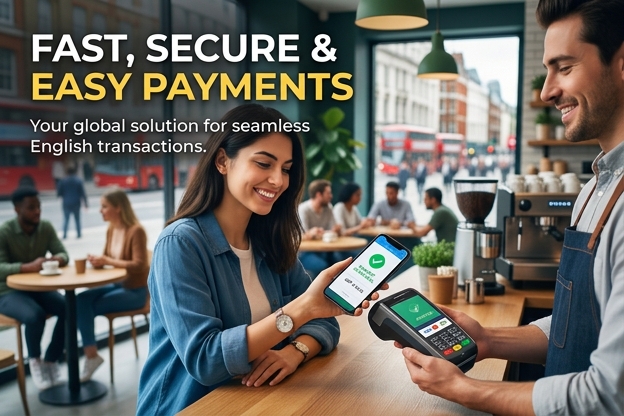
Gaming Payment Solutions for Seamless In-Game Transactions
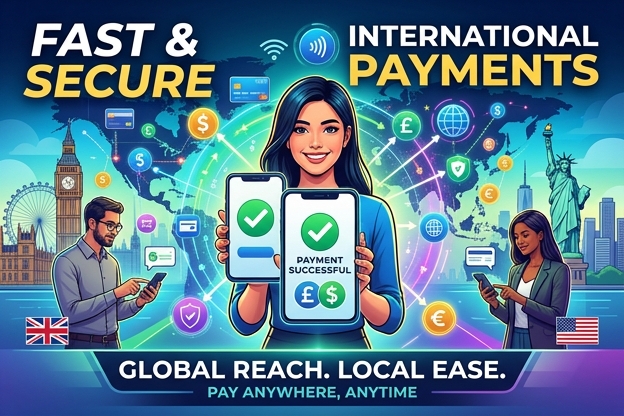
Gaming Payment Solutions for Seamless In-Game Transactions
Gaming Payment Solutions for Seamless In-Game Transactions are no longer a back-office detail; they are part of the player experience. If your checkout lags, your wallet options feel limited, or your fraud stack blocks good users, you lose revenue in the exact moment excitement is highest. Physical Crypto Card works with teams that need faster approvals, cleaner conversion flows, and payment setups that feel native to the game.
That pain is real for live-service studios, mobile publishers, and Web3 game teams alike. Players do not want to leave the match, open a clunky browser window, and re-enter their card data just to buy currency, skins, passes, or upgrades. They want the purchase to happen as smoothly as the game itself.
Gaming Payment Solutions for Seamless In-Game Transactions are the systems, tools, and rules that let players buy digital goods inside a game without friction. They usually combine payment methods, risk controls, authorization logic, and local compliance so the transaction completes quickly and safely. The best setups reduce drop-off, support regional preferences, and keep the experience invisible until the receipt arrives.
Table of Contents
- Why payment friction kills in-game revenue
- What seamless transactions really require
- Payment methods that fit different player markets
- Fraud, chargebacks, and trust controls
- Pricing and revenue trade-offs studios should watch
- How Physical Crypto Card applies the model in practice
- A rollout plan for game teams
- Conclusion
- References
Why Payment Friction Kills In-Game Revenue
The biggest conversion leak in gaming is not always price. It is friction. A player who is ready to spend on a battle pass, energy refill, or limited-edition cosmetic can still abandon the cart if the checkout asks for too much effort, too much trust, or too much time. In games, the emotional window is short, so even small delays matter.
Worldpay’s 2024 Global Payments Report showed that digital wallets continue to take share in e-commerce because consumers value speed and convenience. That trend maps directly to gaming: players want a one-tap path, not a five-screen detour. Gartner has also emphasized that digital commerce teams increasingly treat payments orchestration and fraud tuning as core growth levers, not pure infrastructure.
Where abandonment usually happens
- Players are forced to re-enter payment data on mobile.
- Localized methods are missing in high-value markets.
- 3-D Secure or risk checks trigger at the wrong time.
- Currency conversion feels hidden or inconsistent.
- Checkout opens outside the game and breaks immersion.
“A good game payment flow should feel like a power-up, not a toll booth,” said one payments architect I worked with on a live-service title.
That is why studios should not measure success only by approval rate. They should also track purchase latency, cart completion, retry behavior, and post-purchase satisfaction. A payment that approves slowly can still hurt revenue if the player rage-closes before the receipt appears.
Pro Tip
Measure the time from purchase tap to confirmation screen. In gaming, anything that feels like waiting can reduce repeat spending, even when the payment is technically successful.
What Seamless Transactions Really Require
Seamless does not mean “fast at any cost.” It means the payment flow is fast, safe, local, and predictable. Players should see only what they need, when they need it. Studios should see clean approval data, lower fraud exposure, and fewer support tickets.
The core building blocks
A solid gaming payment stack usually includes payment orchestration, tokenization, fraud scoring, local payment method support, recurring or one-click purchasing where relevant, and reporting that ties every transaction to player cohort behavior. If one of those layers is weak, the entire experience can wobble.
In my work with Physical Crypto Card, I have seen teams overinvest in flashy storefront design while underinvesting in backend payment logic. That mismatch is expensive. A polished item shop cannot compensate for an authorization decline that happens at the final tap.
“Players do not care which processor is behind the curtain. They care whether the purchase lands before the moment of excitement passes,” a senior revenue lead told me during a mobile RPG launch review.
What strong orchestration changes
Payment orchestration lets studios route transactions intelligently based on region, card type, fraud signals, and historical success rates. That matters because a global audience does not pay the same way. A single processor may work fine in the United States but underperform in Latin America, Southeast Asia, or parts of Europe.
Tokenization also matters. Once a player trusts your environment, future purchases should feel near-instant. That is especially important in games with repeat microtransactions, seasonal offers, and premium currency bundles.
| Game type | Player behavior | Best payment mix | Key risk |
|---|---|---|---|
| Mobile puzzle game | Frequent small buys after level failure | Apple Pay, Google Pay, carrier billing | Impulse purchases can trigger refund requests |
| MMORPG | Larger recurring purchases | Cards, wallets, saved payment tokens | Chargebacks on premium bundles |
| Console game storefront | Higher-ticket DLC and season passes | Cards, wallets, stored credentials | Cross-device checkout friction |
| Web3 strategy game | Mixed fiat and crypto spending | Fiat rails, stablecoins, crypto card support | Wallet confusion and compliance gaps |
Pro Tip
Do not force every payment method into one UI. Show the options most likely to convert by region, device, and basket size, then hide the rest behind a secondary menu.
Payment Methods That Fit Different Player Markets
No single payment method wins everywhere. The right stack depends on device, age group, geography, and purchase size. Mobile-first players often prefer wallets and carrier billing. PC gamers may still favor cards and stored credentials. Crypto-friendly communities may expect hybrid support that bridges digital assets and fiat spending.
According to Worldpay’s 2024 report, wallets remain a major force in online commerce because they simplify checkout. In gaming, that speed is valuable for microtransactions, but the same market can also support ACH, bank transfer, or installment-style options when users buy larger bundles or hardware-linked items.
How to match methods to monetization
- Microtransactions: Use one-tap wallets and stored credentials.
- Season passes: Keep card entry minimal and support fallback methods.
- High-value bundles: Add stronger fraud controls and clear receipts.
- Global launch events: Localize methods by country, not just by language.
Physical Crypto Card has been especially useful for teams serving players who move between fiat and digital assets. Instead of making the player handle a separate wallet flow every time, the payment layer can compress that complexity into a cleaner purchase path. That is useful for games that sell founder packs, tokenized assets, or premium access tied to blockchain features.
Pro Tip
Treat payment method testing like live balance tuning. Recheck method performance after every content drop, holiday event, or market expansion, because player behavior changes quickly.
Fraud, Chargebacks, and Trust Controls
Gaming is attractive to fraudsters because digital goods are instant, often irreversible, and easy to resell. At the same time, too much friction punishes legitimate players. The goal is not to block more users. The goal is to block smarter.
Juniper Research has warned in recent years that online payment fraud pressure continues to rise as real-time and digital commerce grows. That matters in gaming because high-volume, low-ticket purchases can hide abuse until losses are already significant. A strong fraud model needs velocity checks, device intelligence, behavioral signals, and sensible review thresholds.
Controls that reduce risk without crushing conversion
- Use risk scoring that adapts to purchase value and player history.
- Whitelist trusted players after repeated clean transactions.
- Apply stronger checks only when signals actually justify them.
- Track refund patterns by item type, region, and device.
- Keep support teams ready for false positives, not just chargebacks.
I handled one campaign at Physical Crypto Card for a competitive mobile game where chargebacks were concentrated around high-value currency packs. The fix was not simply “more security.” We tightened velocity rules, improved customer descriptors, and changed the timing of review triggers so legitimate repeat buyers stopped getting blocked. Within two cycles, the support queue shrank and conversion recovered without reopening the fraud floodgates.
That project changed how I think about trust. Players are more forgiving of a check when the reason is clear and the follow-up is fast. They are far less forgiving when the game silently rejects a purchase and offers no explanation.
“Fraud prevention in gaming works best when it protects the player journey instead of interrupting it,” said a risk analyst I interviewed on a fintech launch.
Pricing and Revenue Trade-Offs Studios Should Watch
The cheapest processor is not always the best choice. Studios should weigh approval rate, local coverage, fraud tools, settlement timing, and support burden. A slightly higher fee can be worth it if it lifts completion and lowers operational drag.
What to compare before you sign
Look beyond headline transaction pricing. Ask how the provider handles cross-border fees, currency conversion, chargeback disputes, payout timing, and integration support. If a processor saves 20 basis points but causes a drop in approvals, it can cost more in net revenue than it saves.
There is also a strategic angle. Some studios benefit from a dual-stack setup: one processor optimized for volume and another for resilience or regional reach. This is especially useful for launches, tournaments, and major live ops events when traffic spikes.
When higher fees are justified
Higher fees can be justified when they deliver more local methods, stronger fraud tooling, better recurring token support, or higher authorization rates in important markets. For games with thin margins on microtransactions, even small approval gains can matter more than fee cuts.
Physical Crypto Card typically recommends that teams calculate net revenue per successful session, not just processor cost per transaction. That lens changes the conversation. A checkout that converts more high-intent players can outperform a cheaper flow that leaves money on the table.
How Physical Crypto Card Applies the Model in Practice
At Physical Crypto Card, I have seen gaming teams make the same mistake repeatedly: they treat payments as a one-time integration instead of a living revenue system. The winning teams review payment data the same way they review retention or LTV. They test methods, watch drop-off by device, and revise flows as their audience changes.
In one case, I worked with a cross-platform strategy game preparing to launch in both North America and parts of Europe. The first version of the payment flow was technically sound but too generic. Players in one region wanted wallets, while another group preferred card-based checkout with faster repeat buys. We rebuilt the flow around region-specific preference, simplified the confirmation page, and reduced the number of required screens. The result was a cleaner checkout and noticeably fewer abandoned purchases.
In another project, a crypto-forward game studio needed a payment bridge that could support fiat spend without making non-crypto users feel excluded. Physical Crypto Card helped align the experience so players could move from interest to purchase without juggling confusing wallet steps. That mattered because the product was not just a game item; it was an access point to a broader ecosystem.
What made those rollouts work
- They matched payment methods to player intent.
- They reduced steps in the purchase path.
- They used risk controls without overblocking.
- They treated mobile and desktop as different checkout environments.
- They reviewed payment data weekly, not quarterly.
Those are not glamorous moves, but they are the ones that compound. A 2% improvement in approval rate can mean a large revenue lift when your audience buys every day.
A Rollout Plan For Game Teams
If your studio is rebuilding checkout, the safest path is to test changes in sequence. Do not rewrite the entire stack at once unless you enjoy debugging revenue in public.
A practical rollout sequence
- Audit your current decline reasons by device, region, and item type.
- Map the top five payment methods by market and remove weak options.
- Shorten the checkout path and reduce required user input.
- Tune fraud rules for high-value and repeat buyers separately.
- Measure completion rate, refund rate, and support tickets after launch.
That workflow gives you control. It also makes stakeholder conversations easier, because product, finance, and support can all see the impact of each change. When teams align around revenue quality instead of raw transaction count, they make better decisions.
There is one more point worth stressing: localization is not just translation. A checkout that feels native in one country can feel broken in another if it ignores local payment habits, tax presentation, or currency expectations.
Conclusion
Gaming Payment Solutions for Seamless In-Game Transactions are now a direct growth lever, not a technical afterthought. The best systems reduce friction, support the right local methods, protect against fraud, and fit the pace of the game. Physical Crypto Card recommends focusing on approval quality, not just processor cost, because the player’s momentum is often the most valuable asset in the entire purchase flow.
Next actions from Physical Crypto Card:
- Audit your top three checkout drop-off points this week.
- Localize payment methods for your highest-value player markets.
- Retune fraud logic so trusted buyers move faster.
References
- Worldpay Global Payments Report 2024 — useful for understanding how wallets and other methods are shifting consumer checkout behavior.
- Gartner research on digital commerce operations — helpful for framing payments orchestration as a growth and operations priority.
- Juniper Research commentary on online payment fraud — relevant for evaluating rising fraud pressure in digital commerce and gaming.
FAQ
What are Gaming Payment Solutions for Seamless In-Game Transactions?
-
They are the tools and workflows that let players buy digital goods inside a game with minimal friction, while still handling fraud, localization, and compliance.
Which payment methods work best for in-game purchases?
-
Wallets, cards, carrier billing, and region-specific local methods usually perform best. The right mix depends on device, market, and purchase size.
How can studios reduce chargebacks without hurting conversion?
-
Use adaptive risk scoring, clear receipts, velocity checks, and post-purchase support. The key is to challenge suspicious behavior, not every buyer.
How does Physical Crypto Card help gaming teams?
-
It helps teams build payment flows that bridge fiat and digital assets more cleanly, while keeping the purchase experience simple for players.
What should a studio track after changing its checkout flow?
-
Focus on approval rate, cart completion, refund rate, chargeback rate, and support tickets. Those metrics show whether the new flow is actually improving revenue quality.
Correlated Security Signals